
Short answer: Crypto liquidations are forced closures of leveraged trades when collateral no longer meets an exchange’s margin rules. Around November 5, 2026, CoinDesk reported more than $1 billion in crypto derivatives liquidated in about 24 hours as Bitcoin slipped back toward the mid-$70,000s after a brief post-election bounce above $80,000. Knowing how leverage, longs vs shorts, and cascades work helps beginners reduce risk — without treating every wipeout as a buy or sell signal.
Headlines about “billion-dollar liquidations” can sound like the whole market is collapsing. Often they describe something narrower: traders who borrowed to amplify bets had those bets closed for them. This guide explains what that means, what the early-November 2026 episode showed, and a practical checklist if you are new to crypto risk.
What Are Crypto Liquidations?
In crypto derivatives markets, liquidation is the forced closure of a leveraged position when a trader cannot meet margin requirements. CoinDesk’s explainer defines it as what happens when there are insufficient funds to keep a leveraged trade open, so the exchange closes the position.
Two ideas sit behind every liquidation:
- Margin (collateral): the money or crypto you put up so the exchange will let you open a larger position.
- Leverage: the multiplier that increases position size relative to that margin. Higher leverage means a smaller adverse move can wipe the margin out.
CoinDesk’s guide uses a simplified rule of thumb: liquidation risk rises with leverage (for example, 5× implies roughly a 20% adverse move could threaten that margin: 100 ÷ leverage). Real platforms also use maintenance-margin thresholds, fees, and insurance funds, so the exact trigger is set by the exchange.
If you only buy and hold spot Bitcoin or ether in a wallet you control, you are generally not subject to this kind of forced derivatives liquidation. Spot prices can still fall, and exchange custody risk is a separate issue, but no leverage margin call is closing your spot bag for you.
Long vs Short Liquidations
Leveraged traders usually take one of two sides:
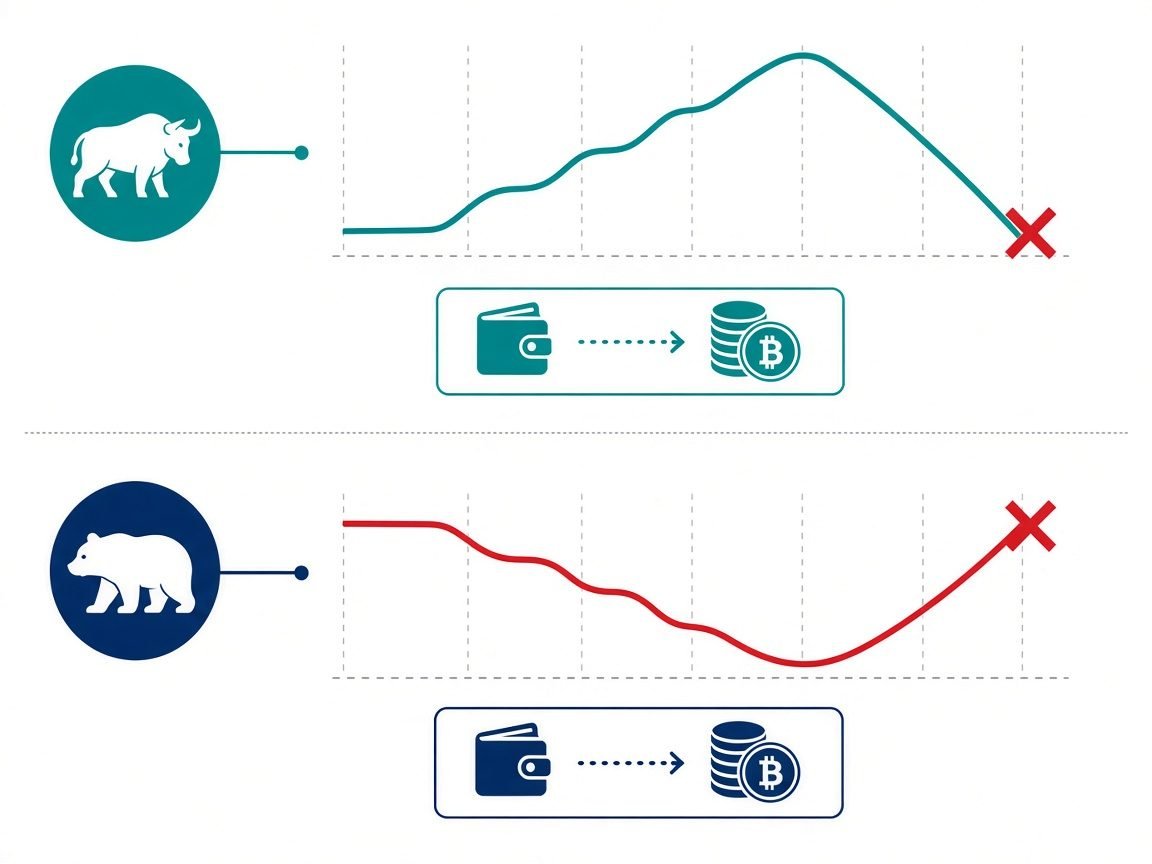
- Long: betting the price will rise. Liquidated when price falls far enough that remaining margin cannot support the position.
- Short: betting the price will fall. Liquidated when price rises enough to exhaust the margin.
That is why a sharp drop often shows long liquidations dominating the tape, while a violent squeeze higher often liquidates shorts. CoinDesk’s November 5, 2026 coverage noted that most of that day’s liquidated positions were bullish bets — longs forced out as the post-rally move reversed.
What Happened Around November 5, 2026?
According to CoinDesk’s markets report on November 5, 2026, Bitcoin gave back its post-election rally as Wall Street’s AI-related stocks sold off hard. Bitcoin was down roughly 5% over 24 hours and sitting just below $76,000; ether was down about 7.5%.
On liquidations, CoinDesk reported — citing CoinGlass — that more than $1 billion in crypto derivatives positions were liquidated over the prior 24 hours, mostly from bullish bets. It called that the largest wipeout since at least October 28–29, when Bitcoin tumbled from nearly $82,000 toward $76,000.
CoinDesk’s same-day live updates added that aggregate Bitcoin futures open interest tumbled below $26 billion from about $28 billion earlier in the session, according to Coinalyze data they cited. Falling open interest during a crash often means leverage is being closed or flushed out.
Context for the bounce that preceded the flush: the same live coverage described Bitcoin climbing back above $80,000 early on November 5 after briefly sinking near $75,700 amid midterm-election volatility. The sequence many traders felt was relief rally → leverage rebuild → risk-off in equities → forced long liquidations.
Those figures are a snapshot of leveraged positioning under stress, not a forecast. For sentiment context that often moves with these episodes, see the Crypto Fear and Greed Index.
Leverage, Cascades, and Open Interest
Why leverage turns a dip into a flush
With leverage, a modest spot move becomes a large percentage hit against margin. When many traders are long with high leverage near similar prices, a drop can trigger clustered forced sells. Those sells can push the market lower and hit the next liquidation levels — a liquidation cascade.
Cascades are more likely when open interest is elevated, positioning is crowded on one side, liquidity thins in a fast move, and cross-asset stress (for example, equities and AI names) hits crypto at the same time. They are not guaranteed every time prices fall.
Open interest in one sentence
Open interest (OI) is the total notional value of outstanding derivative contracts that have not been closed. Rising OI with rising prices can mean new leveraged longs are building; falling OI into a selloff can mean those positions are being closed or liquidated. CoinDesk’s note that Bitcoin futures OI dropped from about $28 billion toward below $26 billion is an example of that flush — sourced to Coinalyze via CoinDesk.
Funding rates
Many traders use perpetual futures — contracts with no expiry. Investopedia explains that a funding rate periodically transfers payments between longs and shorts to keep the perpetual near spot. When funding is positive, longs typically pay shorts; when negative, shorts pay longs. Intervals often run about every eight hours, though platforms differ. Even before liquidation, high positive funding can slowly erode a crowded long.
Practical Checklist for Beginners
- Prefer spot over high leverage. If you do not understand maintenance margin, skip leverage — many long-term investors never need it.
- If you use leverage at all, keep it low. Higher leverage raises liquidation odds. Treat double-digit leverage as advanced and often unnecessary.
- Size so a full loss of that margin is survivable. Never risk rent, emergency savings, or near-term bills.
- Learn your platform’s liquidation price, fees, and funding schedule before opening a trade.
- Reduce size before big known events if you cannot monitor the position. Stops help but can fail in gaps and cascades.
- Treat OI and crowded positioning as context, not a crystal ball.
- Remember exchange and custody risk. Derivatives live on platforms; security incidents and withdrawal pauses are separate from mark-to-market losses — see our note on Binance security concerns.
- Do not turn a liquidation headline into a personal action plan. Forced selling elsewhere does not automatically mean you should sell spot — or “buy the dip.” Longer-horizon process tools such as dollar-cost averaging vs lump sum are about investing discipline, not leverage.
What Liquidation Headlines Do — and Do Not — Tell You
They can tell you leveraged traders got squeezed, risk was concentrated, and volatility was high enough to trip margin engines.
They cannot tell you Bitcoin’s fair value, whether the bottom is in, or whether you should change a carefully planned spot allocation. A $1B+ print measures derivative pain, not every crypto holder. For industry structure beyond one chaotic day, see our Ethereum outlook.
Frequently Asked Questions
What are crypto liquidations in simple terms?
Forced closures of leveraged trades when collateral runs too low. The exchange closes the position so losses stop eating required margin.
Did more than $1 billion really get liquidated around November 5, 2026?
CoinDesk reported more than $1 billion in crypto derivatives liquidations over about 24 hours, citing CoinGlass, during the November 5, 2026 selloff that pushed Bitcoin back toward just below $76,000. Totals depend on the time window and may be updated by data providers.
Are liquidations the same as people “selling Bitcoin”?
Not exactly. Liquidations close leveraged derivative positions. Spot holders can sell at the same time, but a liquidation headline is about margin engines, not every wallet.
Do liquidations only hurt longs?
No. Longs are liquidated on large drops; shorts on large rallies. The November 5 episode CoinDesk described was skewed toward long liquidations because price fell after a bounce.
How can beginners avoid getting liquidated?
The most reliable way is not to use high leverage. If you trade derivatives at all, use low leverage, small size, understand funding and margin rules, and never risk essential living money.
Disclaimer: This article is for educational purposes only and is not financial, investment, or trading advice. Cryptocurrency and derivatives trading involve a high risk of loss, including loss of all capital used as margin. Figures cited from CoinDesk, CoinGlass (via CoinDesk), Coinalyze (via CoinDesk), and Investopedia were checked at the time of writing and may be updated by those publishers. Do your own research.