
Quick answer: Core DAO is an EVM-compatible blockchain secured by a consensus model called Satoshi Plus, which lets Bitcoin miners, Bitcoin holders, and CORE token holders vote for the validators that run the network. Bitcoin holders take part by timelocking BTC on the Bitcoin blockchain with a native script (CLTV), so the coins never leave their wallet, and they earn rewards paid in CORE tokens.
If you have spent any time around Bitcoin DeFi, you have probably heard the phrase “Bitcoin staking.” It sounds strange at first. Bitcoin is a proof-of-work chain, so how can anyone “stake” it? This beginner’s guide explains how Core approaches that question, what Satoshi Plus actually is, how self-custodial Bitcoin staking and Dual Staking work, and which risks you should understand before touching any of it. Every technical detail below comes from the official Core DAO documentation, and we link to the specific pages as we go.
What Is Core DAO?
Core is a layer-1 blockchain that tries to borrow security and participation from Bitcoin rather than compete with it. Smart contracts on Core use Ethereum-style (EVM) addresses, which is why the documentation asks miners to provide an EVM-compatible reward address. The network’s native token is CORE, which is used for rewards and for delegated staking.
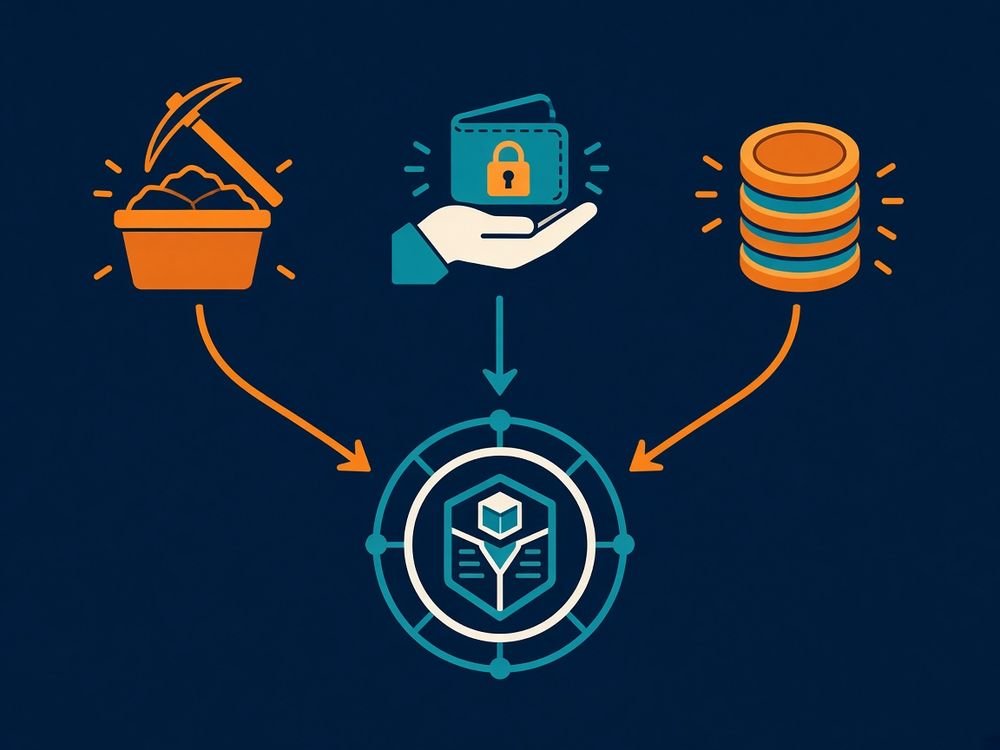
What makes Core different from most EVM chains is not its smart contracts. It is the way validators are chosen. Instead of relying only on token holders, Core lets three groups support validators at the same time. That three-part system is Satoshi Plus.
Satoshi Plus Consensus Explained
According to Core’s architecture documentation, Satoshi Plus is a “tripartite” consensus mechanism that combines:
- Delegated Proof of Work (DPoW): Bitcoin miners and mining pools delegate their hash power to Core validators.
- Self-Custodial Bitcoin Staking: Bitcoin holders timelock BTC on the Bitcoin network and point that stake at a validator.
- Delegated Proof of Stake (DPoS): CORE token holders delegate CORE to validators.
Each validator receives a hybrid score based on all three types of support. Every round, which lasts one day, the top 31 validators by hybrid score form the active validator set. They take turns producing blocks in a round-robin order, with each slot lasting 3 seconds, as described on the validator election page. The docs also note that the live validator set is checked every 200 blocks so that jailed or slashed validators can be removed without stopping the chain.
Part 1: Delegated Proof of Work (Bitcoin Miners)
Bitcoin miners keep mining Bitcoin exactly as before. To support Core, they add a small piece of data to the OP_RETURN field of the coinbase transaction in the blocks they mine. That data names a Core validator and a reward address. The DPoW documentation stresses that this requires no extra energy and does not interfere with Bitcoin mining.
Relayers watch the Bitcoin chain, and an on-chain Bitcoin light client on Core reads the delegation data. Core counts the blocks delegated to each validator using Bitcoin data from one week earlier. The hash delegation guide explains that a miner’s delegation is used in the validator election about seven days later and becomes claimable about eight days later. In return, miners earn CORE rewards on top of their normal Bitcoin rewards.
Part 2: Self-Custodial Bitcoin Staking (Bitcoin Holders)
This is the part most beginners care about. Bitcoin has a built-in script function called CheckLockTimeVerify (CLTV). It can make coins unspendable until a certain time. Core uses this native feature instead of asking you to hand your BTC to a bridge or custodian.
Based on Core’s Bitcoin staking overview, the process works like this:
- Create a timelock. You lock BTC on the Bitcoin blockchain for a period you choose. The minimum is 24 hours.
- Add metadata. The timelock transaction includes which Core validator you support and which Core address should receive your CORE rewards.
- Validator support. The amount of BTC you lock adds weight to that validator in the election.
- Relayers detect it. Core’s relayer network finds valid timelock transactions and passes the data to Core’s consensus logic.
- Rewards. When your validator is elected and performs its duties, a share of rewards goes to the BTC stakers who supported it, paid in CORE.
- Expiration. When the lock ends, your BTC becomes spendable again and your participation stops. There is no auto-renewal. You need a new timelock to continue.
The self-custodial staking page describes the design as having no wrapping, no bridging, and no exposure to smart contract risk for the locked Bitcoin itself. One detail matters a lot: during the lock period the BTC is unspendable even by you. If you suddenly need that money, you have to wait for the timelock to expire.
Part 3: Delegated Proof of Stake (CORE Holders)
The third leg is familiar to anyone who has staked on other proof-of-stake chains. CORE holders delegate tokens to validators on the Core network and share in rewards. Validators take a commission, and the rest is passed to delegators, as the DPoW documentation describes for rewards in general.
What Is Dual Staking on Core?
Dual Staking means doing two things at once: timelocking BTC and delegating CORE. According to the Dual Staking documentation, the more CORE you stake relative to your BTC, the higher the yield tier your Bitcoin stake qualifies for.
The key facts from the official docs:
- There are three boosted yield tiers for BTC staking based on your CORE-to-BTC ratio, plus a fourth, lowest base tier for people who stake only BTC.
- To qualify, you must stake both assets, meet the minimum CORE threshold, and use the same wallet address for CORE staking and for receiving BTC staking rewards.
- Boosted rewards are paid in CORE. Dual Staking boosts the BTC staking yield but does not directly change the CORE staking rewards.
- The docs warn that the reward rate “can fluctuate significantly” and that boosted yields may change daily with market conditions.
Core’s Dual Staking overview states that maximum yields can be roughly 25 to 50 times higher than Bitcoin staking alone. Treat that as a relative comparison from the project, not a promise. A multiple of a small base rate can still be modest, and rewards are paid in a token whose market price can fall.
Is Bitcoin Staking on Core Risk-Free?
No. The design removes some risks, but not all of them. Here is an honest breakdown.
What the design reduces
- Custody risk on the BTC: your coins stay in a Bitcoin script you control, enforced by Bitcoin nodes.
- Bridge and wrapping risk: there is no wrapped BTC token that could lose its peg.
What remains
- Reward token risk: rewards are paid in CORE. If CORE’s price falls, the real value of your yield falls with it. Your BTC is not “earning BTC.”
- Liquidity risk: locked BTC cannot be moved until the lock expires, even in a market crash.
- Operational risk: creating a timelock involves scripts and the right metadata. Mistakes, a fake staking website, or a compromised wallet can still cost you money. Always start from official links.
- CORE delegation risk: the docs note that CORE delegation carries the same trust assumptions as any DPoS system.
- Variable yield: rates change daily, so any APY you see is a snapshot, not a fixed return.
How Beginners Can Learn Safely
If you are curious, the sensible path is slow and boring:
- Read the official docs linked in this article from start to finish.
- Bookmark the official Core website and staking pages yourself. Do not click staking links from replies, DMs, or ads.
- Start with an amount you could afford to have locked and inaccessible, and choose a short lock period first.
- Write down when your timelock expires, because nothing renews automatically.
- Value your rewards in dollars, not just in CORE, so you see the real return.
Frequently Asked Questions
Does my Bitcoin leave my wallet when I stake on Core?
According to Core’s documentation, no. The BTC is timelocked with Bitcoin’s native CLTV function and stays in your control, but it cannot be spent by anyone, including you, until the lock expires.
What is the minimum lock period for Bitcoin staking on Core?
The official docs list a minimum timelock of 24 hours. You choose the duration, and there is no auto-renewal when it ends.
What do I earn from Bitcoin staking on Core?
Rewards are paid in CORE tokens, not in BTC. The rate varies with market conditions and, if you use Dual Staking, with your CORE-to-BTC ratio.
How many validators does Core have?
Core’s documentation says the top 31 validators by hybrid score are elected each one-day round to produce blocks.
Disclaimer: This article is for educational purposes only and is not financial advice. Crypto assets are volatile and you can lose money. Do your own research and consider your own situation before staking or investing.