

Chargeback vs Section 75 is the choice UK shoppers face when a Black Friday order never turns up, arrives broken, or isn’t what the advert promised. In short: Section 75 is a legal right that makes your credit card provider (and, since 15 July 2026, a regulated buy now, pay later provider) jointly liable with the seller for single items costing more than £100 and up to £30,000. Chargeback is a voluntary card-scheme process that works on debit, credit and prepaid cards for any amount, but you usually have only 120 days to use it.
Black Friday falls on 27 November 2026 and Cyber Monday on 30 November, so plenty of big-ticket orders are about to go through. Below, we compare chargeback vs Section 75, which to try first, and the traps that get claims rejected. Sources: UK law plus Citizens Advice, MoneyHelper, FCA and Which? guidance, checked 26 November 2026.
Chargeback vs Section 75: the key differences
Section 75 comes from the Consumer Credit Act 1974. If you have a claim against a supplier for misrepresentation or breach of contract, you have a “like claim” against the lender, and the two are “jointly and severally liable”. The Act excludes any single item with a cash price of £100 or less, or more than £30,000.
Chargeback is not in any statute. MoneyHelper describes it as an arrangement that Visa, Mastercard and American Express have signed up to, which lets your card provider try to reverse a transaction through the seller’s bank.
| Feature | Section 75 | Chargeback |
|---|---|---|
| Legal status | Legal right under the Consumer Credit Act 1974 | Voluntary card-scheme rules, not a legal right |
| Payment types | Credit cards and regulated BNPL agreements made on or after 15 July 2026 | Debit, credit, charge and prepaid cards |
| Amount | Single item over £100 and up to £30,000 | Any amount |
| What you can get back | Full cost, even if only part was paid on the card, plus some losses caused by the problem | Only what you paid on that card |
| Time limit | Normal legal limits: 6 years (England, Wales, NI), 5 years (Scotland) | Usually 120 days from purchase, or from the event date |
| If refused | Complain to the Financial Ombudsman Service | Ask if the bank appealed; complain to the Ombudsman if it handled the claim unfairly |
Section 75 can pay out more than you put on the card
Citizens Advice explains that if you paid any part of the cost by credit card, Section 75 can cover the whole item, provided its total price is more than £100 and no more than £30,000. Its example is a £250 oven bought with a £50 credit card deposit and £200 in cash: the buyer can claim the full £250. You can also ask for repair costs and for damage the faulty item caused. A chargeback would only return the £50 that went on the card.
The £100 limit is per item, not per basket
This catches out a lot of Black Friday shoppers. Citizens Advice’s example is a £80 phone, £20 headphones and £5 delivery: the order totals £105, but no single item costs more than £100, so Section 75 does not apply and chargeback is the route. MoneyHelper adds that a “family ticket” counts as one item, while separate tickets for each family member do not.
New for Black Friday 2026: Section 75 on buy now, pay later
This is the first Black Friday since the FCA started regulating Deferred Payment Credit, the formal name for most buy now, pay later (BNPL) products. According to the FCA, third-party BNPL agreements entered into from 15 July 2026 are regulated credit agreements, and those made before that date stay exempt.
Which? and StepChange both note that eligible BNPL purchases between £100 and £30,000 now get Section 75 protection, so the BNPL provider can be jointly liable with the retailer if goods don’t arrive, are faulty, or the retailer goes bust. You can also take an unresolved complaint to the Financial Ombudsman Service. None of this applies to BNPL purchases made before 15 July 2026. If you are weighing up pay-later offers this week, our guide on how buy now pay later affects your credit score covers the other side of the decision.
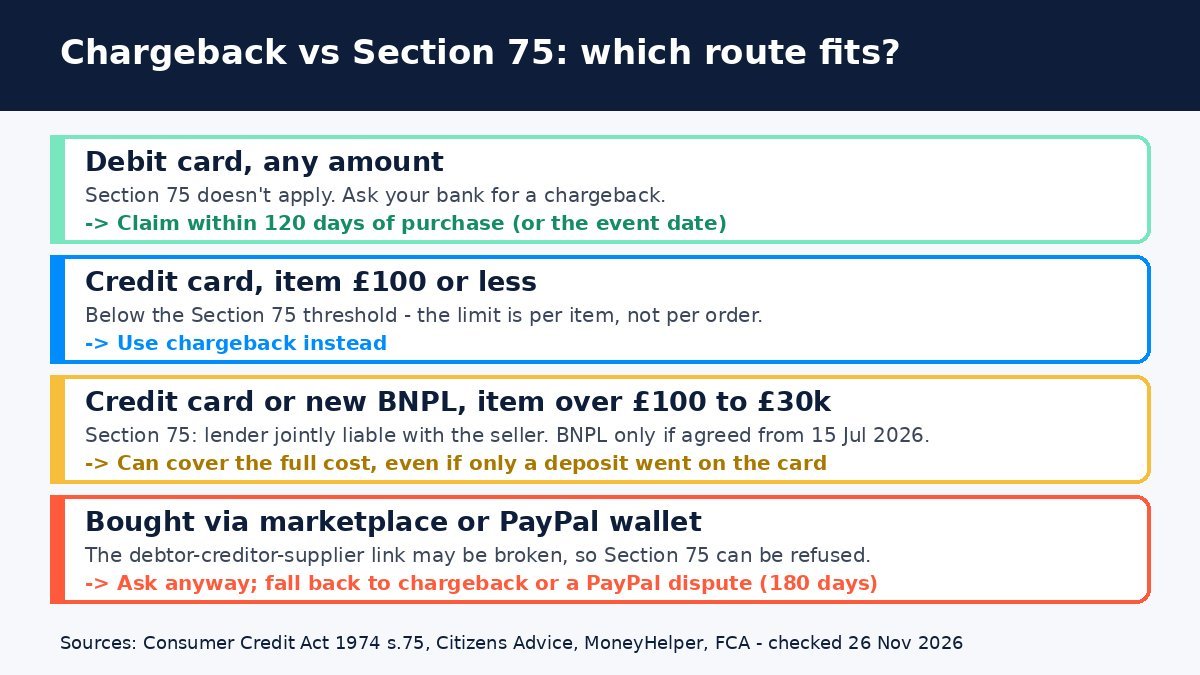
Chargeback vs Section 75: which to try first
Whichever card you used, start with the seller. Citizens Advice and MoneyHelper both say to contact the trader in writing first and keep copies. If that fails:
- Debit card, any amount: chargeback is your main card route. Act before the 120-day window closes.
- Credit card, item £100 or under: Section 75 doesn’t apply, so ask for a chargeback.
- Credit card or post-15 July 2026 BNPL, item over £100 and up to £30,000: you can ask for Section 75. Some people raise a chargeback while still inside 120 days, because Section 75 gives much longer to claim. Which? notes that banks often try chargeback first anyway, because they can recover the money from the retailer’s bank instead of paying the claim themselves.
- Paid from a PayPal balance or via BNPL: Citizens Advice says to start by opening a dispute with the provider. PayPal disputes must be opened within 180 days of paying.
MoneyHelper says your bank should tell you the outcome of a Section 75 or chargeback claim within eight weeks. If you’re unhappy with the answer, or eight weeks pass, you can go to the Financial Ombudsman Service.
Why Section 75 claims get rejected
Section 75 depends on an unbroken “debtor-creditor-supplier” link between you, your lender and the business that actually supplies the goods. Which? says this link is where many claims fail, and Citizens Advice lists common ways it breaks:
- Marketplaces such as Amazon or eBay, when you buy from third-party sellers through their site.
- Voucher sites such as Groupon.
- Wallets like PayPal, where money goes into an account and that account pays the seller. A Financial Ombudsman decision (DRN0795565) found the link was broken where a credit card was used through PayPal. That said, Which? reports PayPal told it Section 75 applies to PayPal Credit, Pay in 3 and guest checkout. Our explainer on PayPal Friends and Family vs Goods and Services covers PayPal’s own protection rules.
- Travel agents and booking platforms.
Which? also flags a little-known “goods for your benefit” caveat, under which card providers may argue the purchase had to be for you rather than someone else. That matters in gift season, so keep evidence that you were the buyer and the contract was in your name. In all these cases you can still ask, and Citizens Advice says to request chargeback if Section 75 is refused.
Chargeback limits to know
Chargeback is useful, but it is weaker. In decision DRN-6046375, the Financial Ombudsman said chargebacks are not guaranteed to succeed, the seller can defend them, and a customer cannot force a card issuer to attempt one. It added that the Ombudsman would expect an issuer to try one where there is a reasonable prospect of success.
The 120-day clock usually runs from the purchase date. For something in the future, such as event tickets, MoneyHelper says it runs from the date the event should have taken place. Citizens Advice also warns that a trader can challenge a chargeback even after you’ve been refunded, so it suggests leaving the money untouched for a few weeks in case the challenge succeeds.
Whichever side of the chargeback vs Section 75 choice you land on, ignore anyone who calls offering to “speed up your refund”. Your card provider does this for free, and refund-recovery calls are a common scam hook. Our guide to gift card scams this holiday season covers similar tricks.
How to make a strong claim
- Gather evidence: order confirmation, the advert or listing, delivery tracking, photos of faults, and every message with the seller.
- Write to the seller first and give a reasonable deadline. Citizens Advice has template letters.
- Contact your card or BNPL provider in writing. Name the route (“Section 75 claim” or “chargeback”) and say what you want: a full refund, repair costs, or partial compensation.
- Track the dates: 120 days for chargeback, eight weeks for the provider’s answer.
- Escalate to the Financial Ombudsman Service if you’re refused or the provider runs out of time.
FAQ
Chargeback vs Section 75: which is better?
For eligible purchases, usually yes. Section 75 is a legal right, can cover the full cost and related losses, and has a far longer time limit. Chargeback is the fallback for debit cards, items of £100 or less, and purchases where the debtor-creditor-supplier link is broken.
Does Section 75 cover debit cards?
No. MoneyHelper confirms Section 75 doesn’t apply to debit card purchases, but chargeback does.
Is Klarna or other buy now, pay later covered by Section 75?
Regulated third-party BNPL agreements taken out on or after 15 July 2026 are covered for items over £100 and up to £30,000. Earlier agreements are not. Check with your provider whether your agreement is regulated.
What is the Section 75 claim time limit?
There is no special Section 75 deadline, but normal legal time limits apply. Which? puts these at six years in England, Wales and Northern Ireland and five years in Scotland.
This article is general information about UK consumer rights, not financial or legal advice. Rules and provider policies can change, so check your card or BNPL provider’s terms and get advice from Citizens Advice or a qualified adviser if a claim is large or complex.